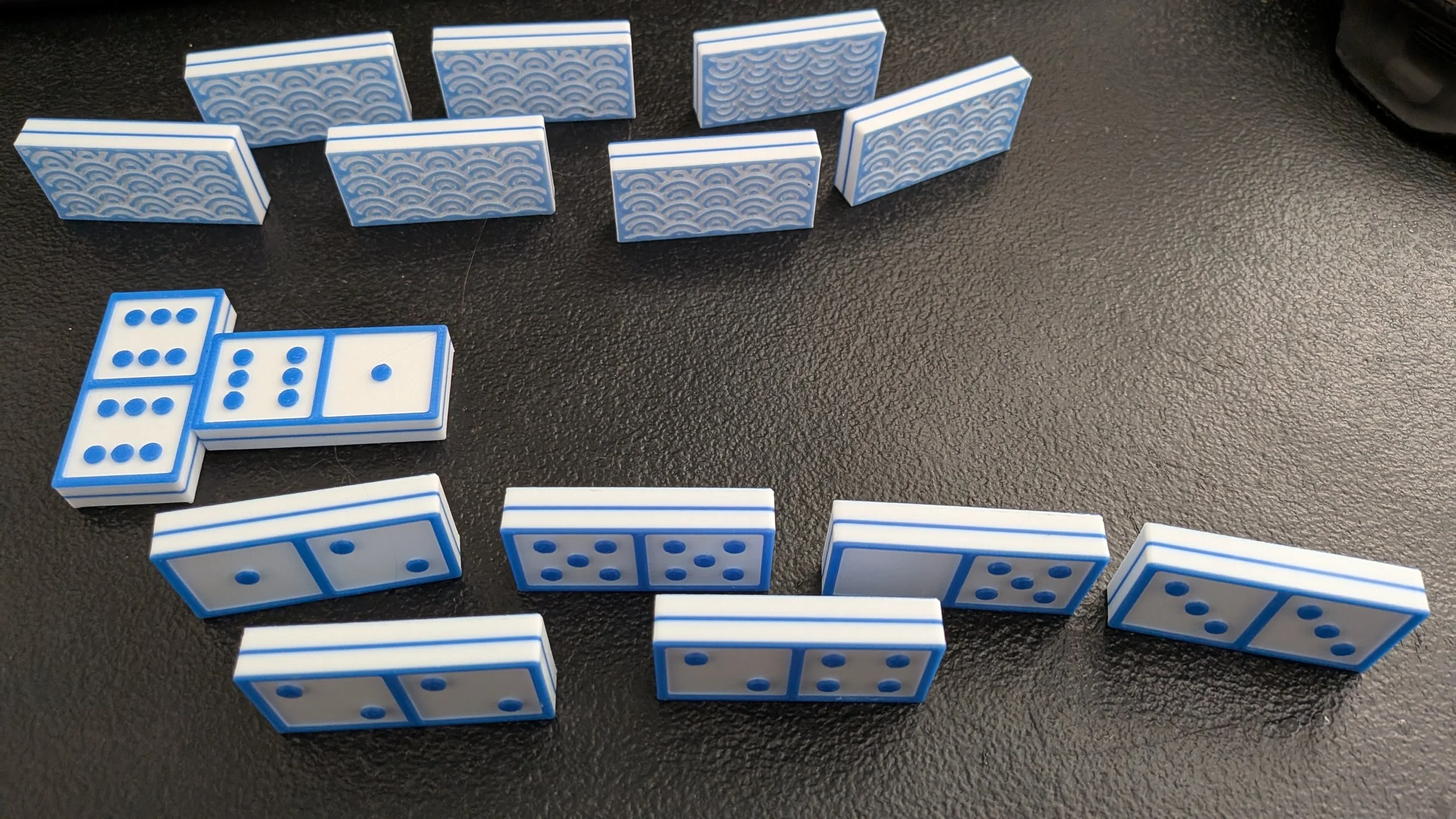
Wagara Five Seasons High-Contrast 3D Printed Domino Set: Creating the Seigaiha Set (Part Two)
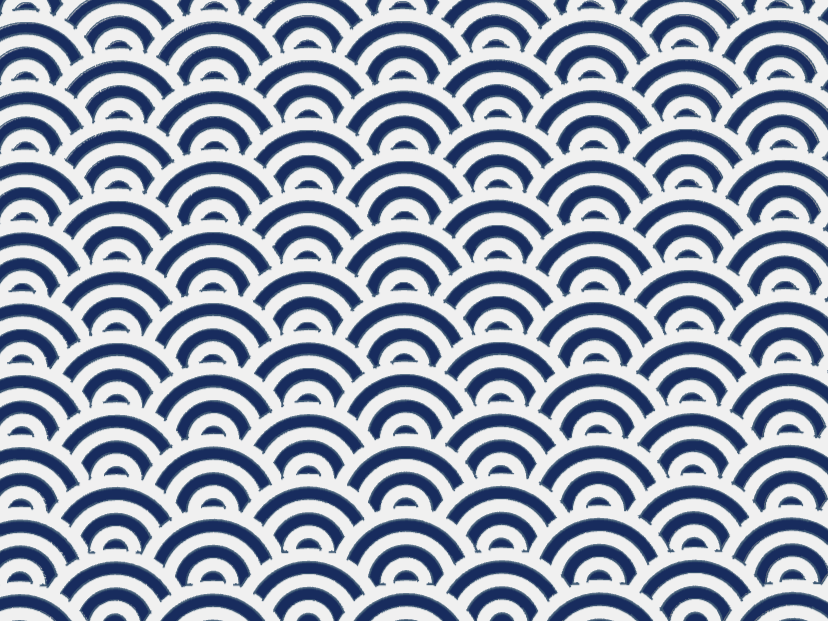
It was then that I decided to learn SolidWorks. It was exciting, infuriating, and amazing all at once. I could feel the power under the engine, so to speak. I learned how to make a 3-point arc, what a sketch was, and how to create guidelines, all of which took a long time, but resulted in a very nice repeatable pattern.
Wagara Five Seasons High-Contrast 3D Printed Domino Set: History (Part One)
I hadn’t found the answer to my initial question about the name of that style of art on the panels, but I found something else: a new project! I’m going to make a series of wagara high-contrast prints for each season. There is a twist to the project: I’m going to use these designs as backs for custom sets of dominoes, matching each season’s dominoes with its own custom box and lid.
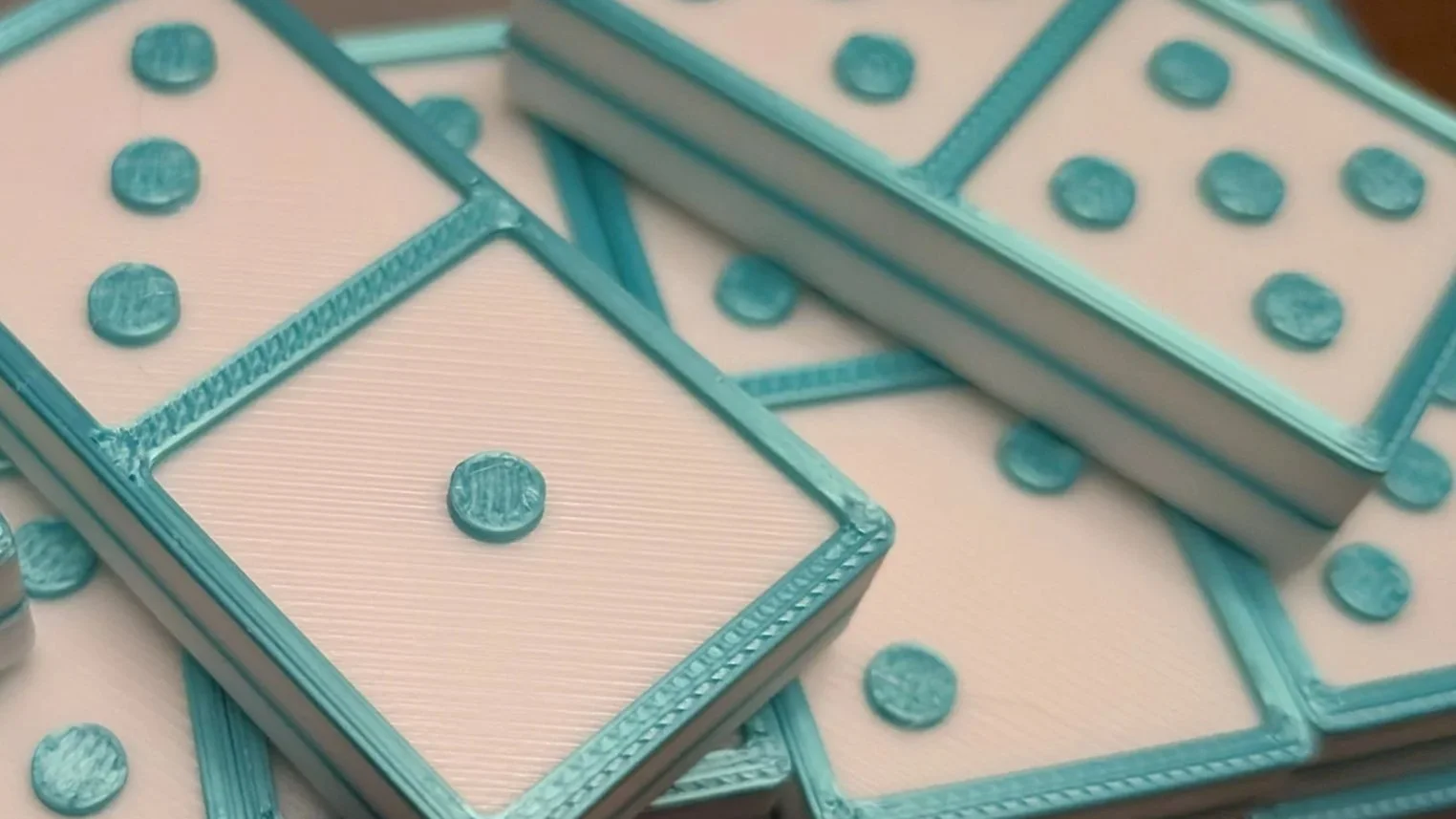
Designing and 3D-Printing a Custom Set of Dominoes Splashed with Color!
In my mind, the dominoes are already finished and in front of me. They’re ivory in color save for two bands: a band of red in the center, and another around the top, where the matching pips are. The center band of color isn’t very wide, only thick enough to prevent the color of the pips from showing through. The top band, made colorful via the filament-swap technique (like the center layer), is not only decorative, but also hides the raised pips when the dominoes are face-down.
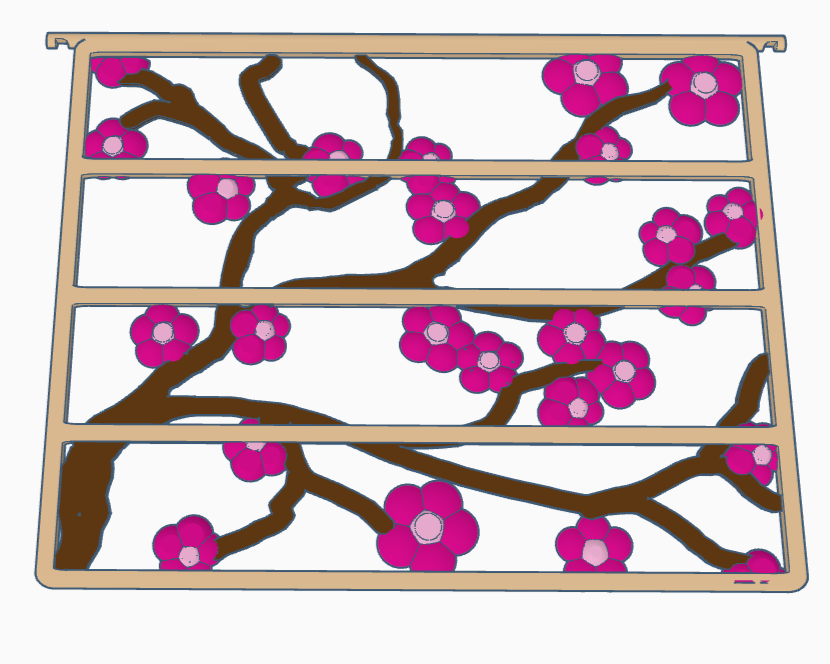
Custom 3D-Printed File Separator with Cherry Blossom Branch Design
I hadn’t played with the scribble tool before, so it was kind of cool to use it to solve the problem I was having making branches. It was so cool, in fact, that I wanted to share the technique, as well as show my very pretty cherry blossom trellis divider.
Custom Design: Compliant Sink Plug that Tapers (Part 2)
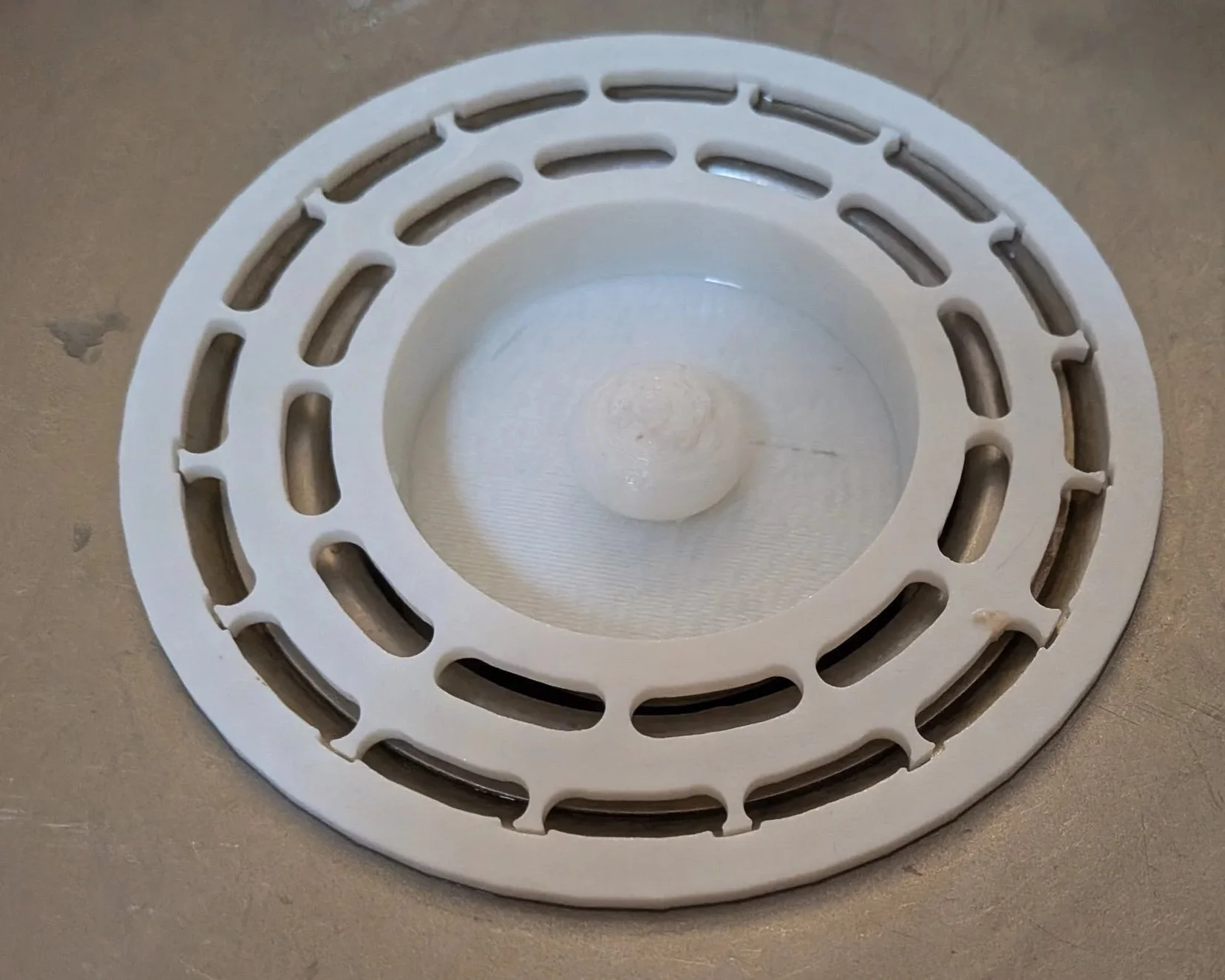
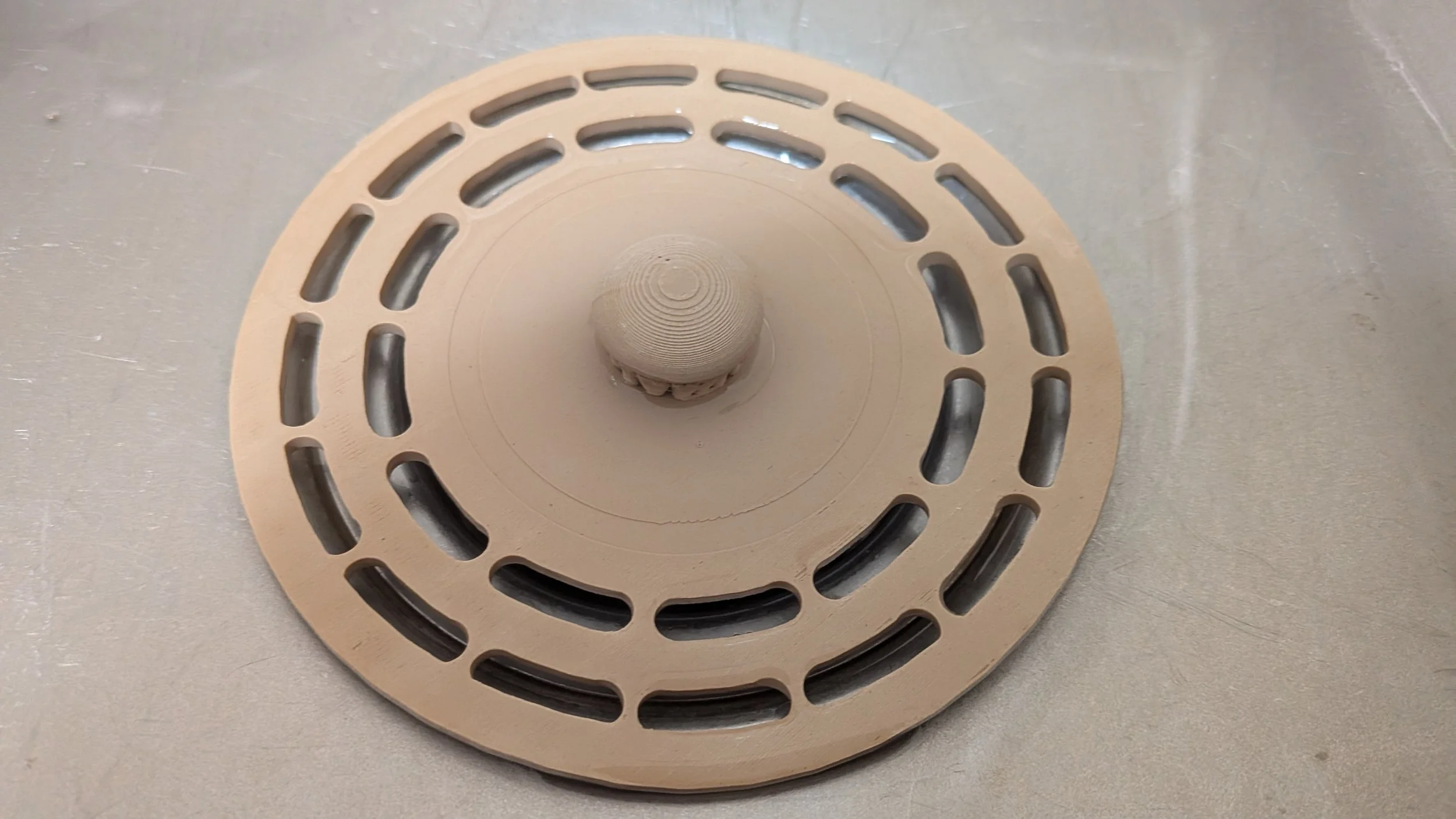
The result: it’s a great strainer, guarding my sink drain as we speak. However, and this is a BIG HOWEVER, the well collects water. Not good. The strainer portion has some flex, and lets water flow. The fit is nice, the handle is comfortable though it really should get sanded down, as the texture is rough here. This device does what I want, but needs a redesign to be truly thoughtful.
Custom Design: Compliant Sink Plug with Strainer
"The next step was to make the rings flexible. I like the print in place flexible strips I had made earlier; I felt like more give would let it resist the weight of heavy kitchen items, while the holes would provide drainage."
Repairing a Drawer via a Custom 3D Printed Patch: the Compound Wedge (Part 2)
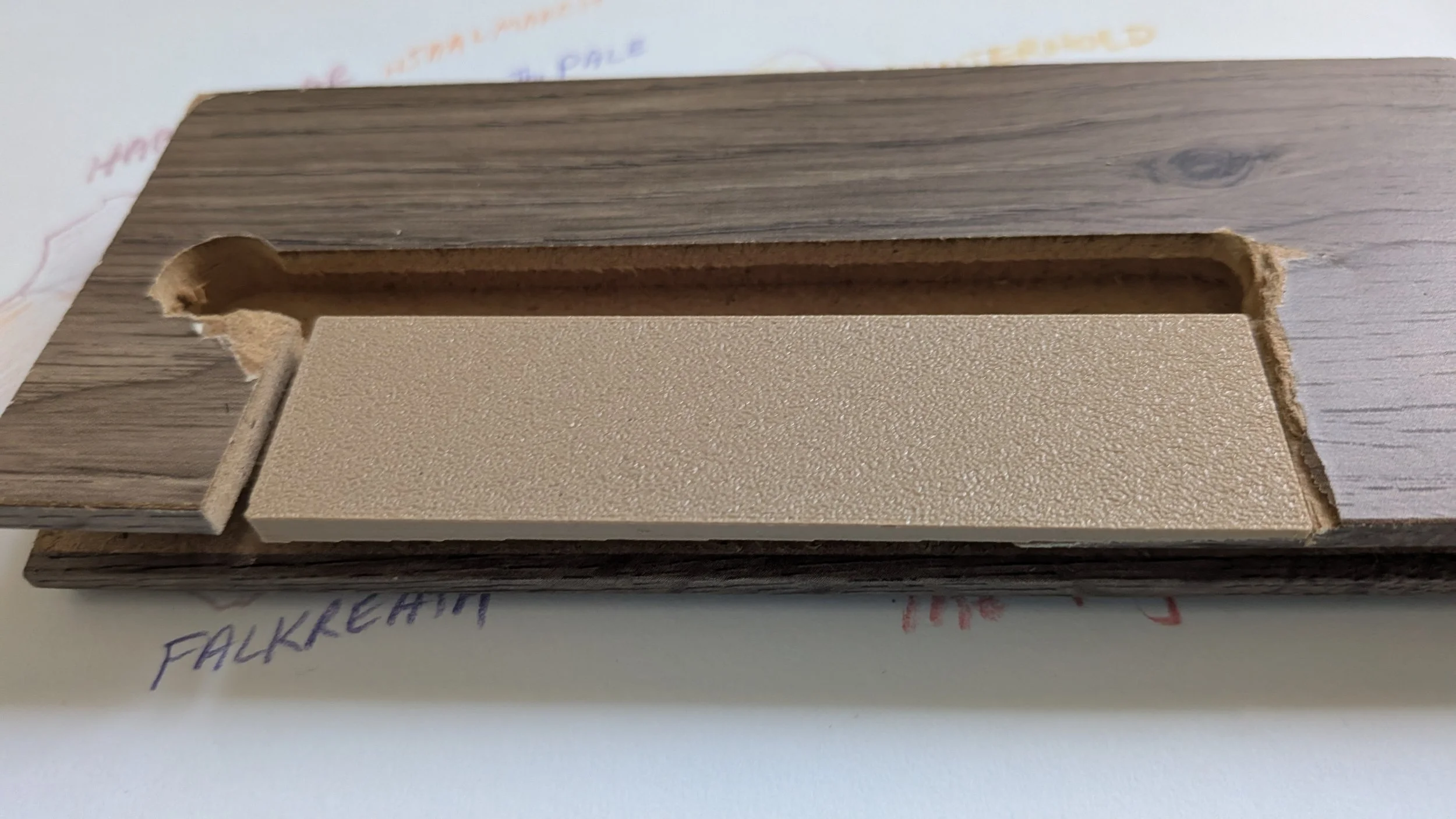
Of course it wasn’t that easy, notably because this panel wasn’t missing a simple wedge: it was a wedge missing a wedge, a sloped angle that suddenly sloped up even harder, a compound wedge, if you will.
Repairing a Drawer via a Custom 3D Printed Patch: the Trapezoidal Dutchman (Part 1)
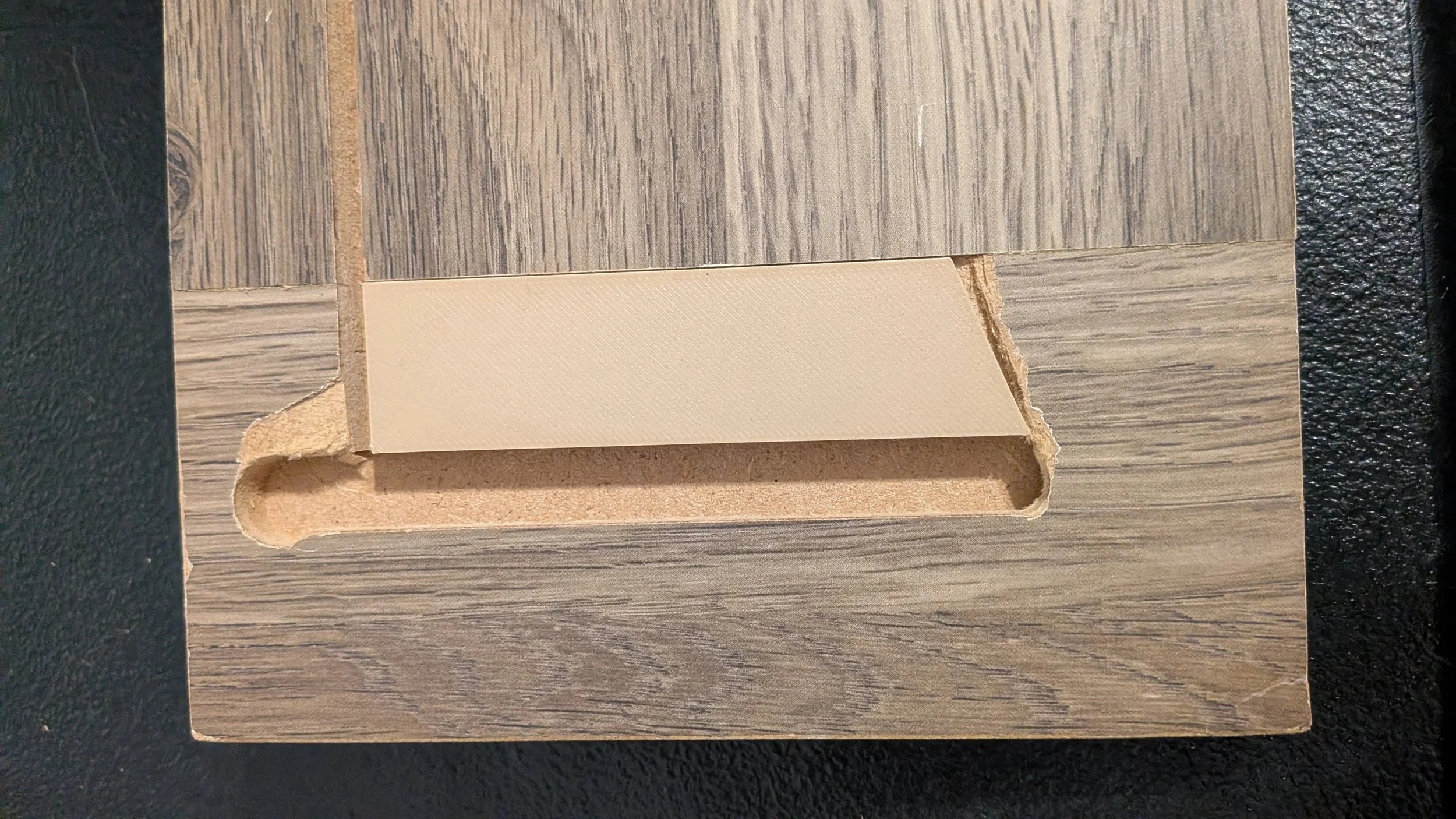
Version one finished printing before I finished writing the piece, it was unbelievably fast to design and build. I've already started on the second piece — by this time tomorrow we will once again have a working nightstand drawer. Hooray for 3D printing!
Designing a 3D-Printed Lid for Comet Cleanser
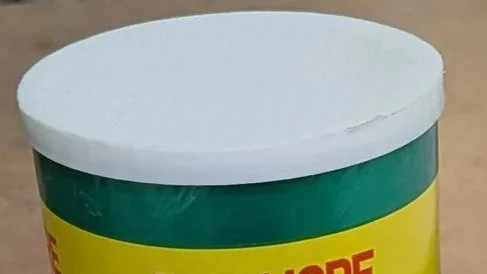
I designed a solution for that, and it was wonderful. I even had it as one of my free uploads. However I have since learned that my design might not work the same way on every printer with every filament type, and that I need documentation. Also someone seems to have thrown away the lid. Gasp.
Time for a re-design, and this time you can come along with me :)
3D Printed Custom Nightstand Organizer (Part 3): Tab and Slot Connectors for Multi-Tier 3D-Printed Shelving
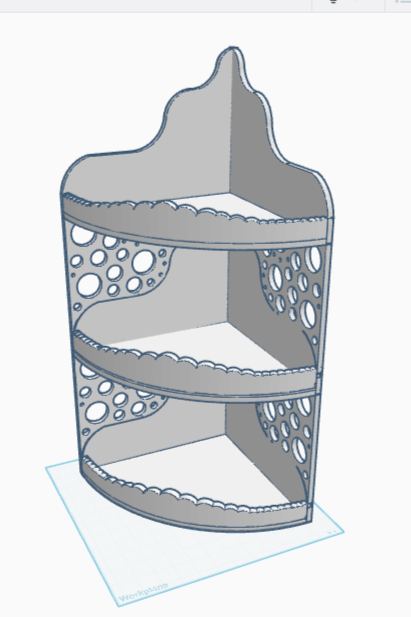
I spent days worth of hours breaking the arc into bits while documenting the process. Creating new wave patterns, while documenting the process. Putting it back together, documenting the process. Changing it up a little by repeating all the prior steps but on a second, smaller tier, dutifully documenting the entire time. All that effort, only to realize that the second tier was rather ugly, as was the sectioned curtain wall, a fact made especially apparent by the prototypes, which I printed in miniature. I’m sharing an image so that the work doesn’t feel entirely wasted.
3D Printed Custom Nightstand Organizer (Part 2): Sculpting Curved Walls and Decorative Panels
I had made sculpted curved walls and flowing decorative panels in Tinkercad, using negative shapes, grouped cuts, and carefully aligned curves, and the result was beautiful. I attached it to the base. It kept all the separate colors because I used the bundle function to keep the pieces together while I moved them around. Neat. Except for one thing: at some point I lowered the center red sphere, and didn’t notice til now. No problem, I broke it all apart, moved the base out of the way, raised up the center sphere, then combined it all again, to make a perfect fence. I then recombined the absolutely perfect fence to the base.
3D Printed Custom Nightstand Organizer (Part 1): Planning Stage and Creating Wave Patterns
I love the look of a shelving unit I made earlier, and am thinking of making something similar in style, but more resistant to cats. While I’m not a big fan of chunky builds, I think I can make this one look good. Time to put some of that art practice to work!
Designing a 3D-Printed Kitchen Organizer (for Food Packets)
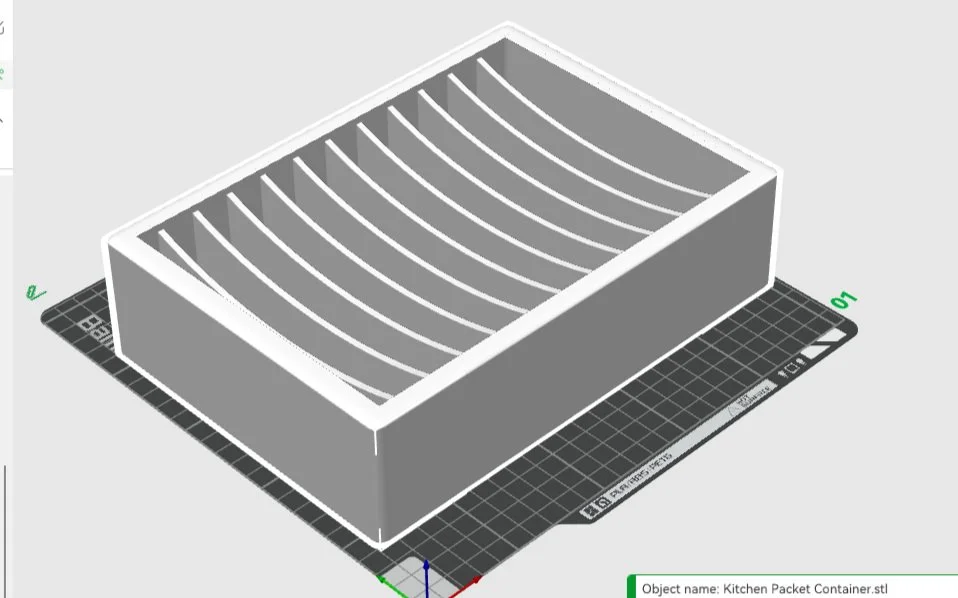
The good news: the print was perfect! The bad news: the scaffolding was the absolute worst. The good news again: my toolbox had everything I needed to deal with the unruly scaffolding! It took time and patience, and also a chisel and some sandpaper.

3D-Printed Wedding Flowers (Part 2)
“I made another crown, exactly like the first, only this time I decided to add the pieces to a ring shape, with a plan to make the next three pieces nestable, then print them separately instead of as one solid piece.”
3D Printed Wedding Flowers (Part 1)
I then looked at what went right.
Despite the crummy edges, my idea for forming a petal tepal shape had mostly held. The stem/tepal joining looked like it could work if I fine-tuned it — it was only the height of the rings that made the stacking bad. The stem itself was rather nice, proof that the overall concept worked.
Excellent. Back to the drawing board.
Magnetic Stylus Holder for an Amazon Kindle Scribe
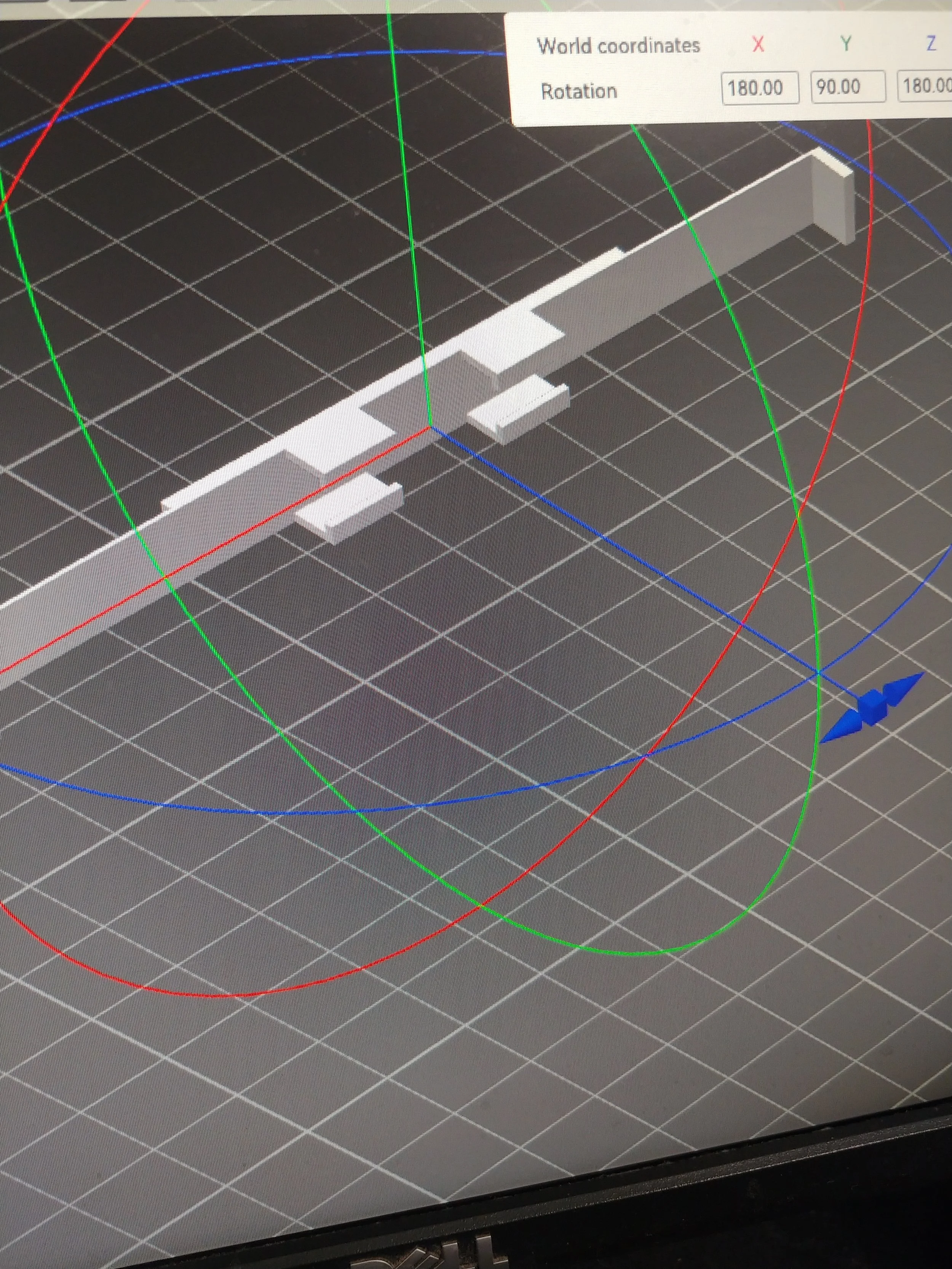
The second print was perfect. The stylus stayed in place when subjected to vigorous shaking. The sides of the holder are sturdier, and the magnet holes are a more aesthetically pleasing depth. Excellent. I added superglue to the magnet holes, then dropped the magnets in, and boy was I glad I wore workman’s gloves for this. The glue was unexpectedly messy, as it came pouring with incredible speed out of an improbably small tube. I felt that the laws of physics were being defied by that surreal flood.


.