3D Printing Simple Machines (Part 2: Wedge)
Updated My Journal
Wedge
When I think of ‘wedge’, I first think of shoes, then cheese, then pizza slices. I don’t think about machines, not even a bit, yet that’s what a wedge is: one of the six simple machines.
I spent a bit of time trying to understand whether or not wedge heels were nothing more than shoes on top of simple machines. Apparently not — they share a shape but not a function, like the cheese and the pizza slice.
With that cleared up, I considered what other things might be actual wedges as opposed to wedge shapes. The first thing to come to mind: a doorstop. I’m going to make one right now. While I’m making it, I’m going to be thinking about other examples. It would probably help if I defined ‘wedge’ first.
A wedge is a simple machine, often triangular, that changes the force applied to its blunt end into outward force that is applied to (or from maybe?) its sloping sides. I struggled mightily with this concept, until I found a video that explained it using small words and easy-to-understand visuals. Simple Machines - Wedge | Science for Kids, by Little School, was exactly what I needed. Knives, nails, shovels, axes, even zippers are wedges, machines that can change force so as to separate items, lift items, or hold them in place.
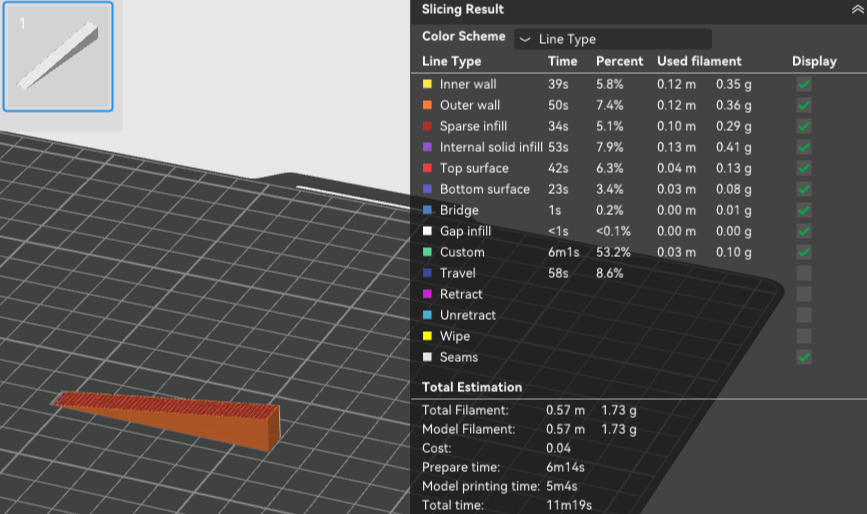
A Very Small Download
The doorstop was really easy. I estimated the size I needed for the doorstop, maybe two and a half inches long and barely tall at all, then plopped Tinkercad’s roof shape onto the drafting area. I then clipped half the roof with a cube-shaped eraser, leaving a single wedge. A quick change of dimensions, and it was done. It took more time for my printer to heat up than it did to print. Unfortunately I had grossly underestimated the amount of space under my door, and the wedge was too small.
To test the concept despite the setback, I tried an experiment with a ceramic tile. Holding it firmly to the table, I slid it toward the doorstop. Almost immediately, the wedge stopped the tile, as the only way forward was for the tile to rise up off the table and onto the wedge, something a door wouldn’t be able to do. Proof of concept enough for me.
One thing caught my eye earlier: knives being wedges. That blew my mind almost as much as the zipper did. I made three sets of knives, this time experimenting with the direction of the edges. This set could almost be called ‘safety knives’, in that the cutting portions are too wide to be useful, and there is a rectangular block to protect the hand from slippage. They will probably be able to cut into something extremely soft though, and that’s where I’ll get to see which kind of edges work best. The one with the points angled toward the holder (pink, below) looks like the most capable; I’ll find out for sure in about forty-five minutes!
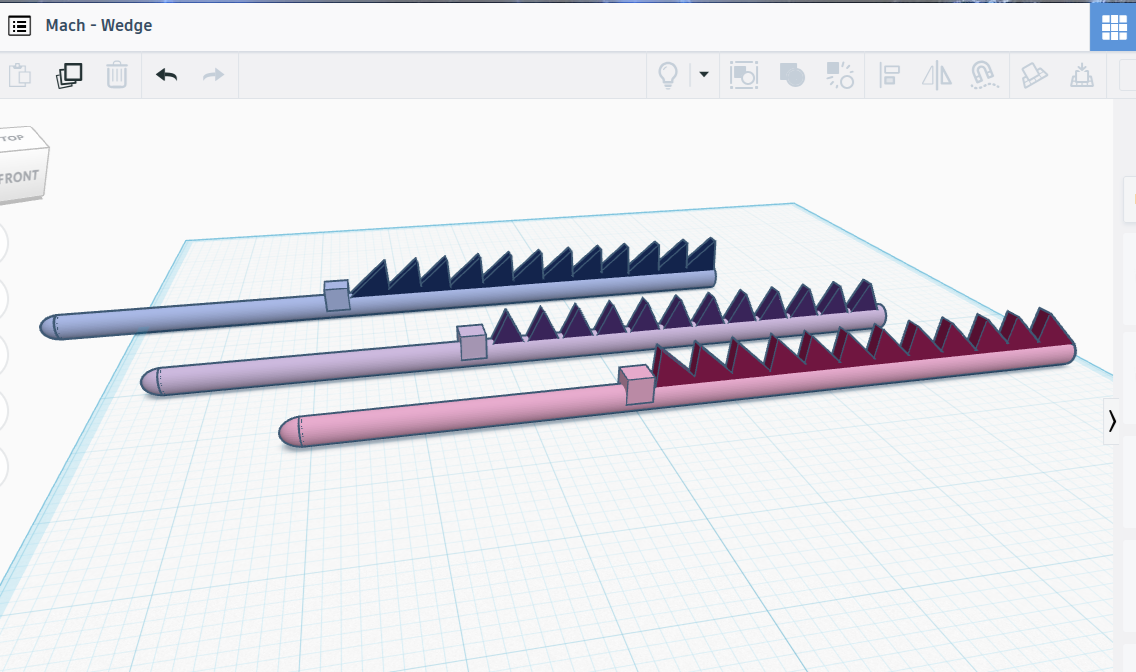
Serrated Blades
I got my answer to the question of which wedge worked best to open a box. I tried all three knives and quite frankly it hurt my hands before any of them pierced the tape. Safety knives indeed — the width of each wedge kept it from sinking in, though I kept alternating between the three for a few minutes.
Here are the results: blades angled towards me had the best leverage when dragging, though the one with straight points was the best at sawing. I say that with dubious authority because none of them really cut through the tape — I finally ended up using the thin end of the too-small doorstop from earlier, which worked great!