Tolerance vs Clearance
Tolerance Vs Clearance
Tolerance is the allowable variation in a part’s dimension, while clearance is how much space there is between components. While the terms are sometimes used interchangeably, apparently it is an engineering bad to do so. To further confuse the issue, and possibly do more bad, tolerance gap seems to be another way of saying clearance.
An example of tolerance vs clearance can be seen with a pencil sharpener and a pencil.
Two of the same kind of pencil sharpener can be slightly different in size, whether due to different machinery creating the parts or for some other reason. If the parts are too large or too small, they won’t fit together. If the hole is too large it can’t clamp the pencil, if it’s too small the pencil won’t fit. Engineers anticipate how much variance in size will leave the parts still able to fit together, as well as how much the hole can deviate from the ideal size and still sharpen a pencil. That variance is the tolerance.
The pencil can’t be the exact same size as the sharpener — it wouldn’t be able to fit inside if it were. The amount of space around the pencil is the clearance.
Tolerance and clearance are both important in that without enough space for or between components, your parts won’t move/work/print properly.
I noticed with my print-in-place projects that tolerance was extremely important — without it some of the pieces could either jam together or fall apart. It also matters for the drawers I’m working on. Was there any more information to be had on the subject?
Types of Fits and a Helpful Illustration
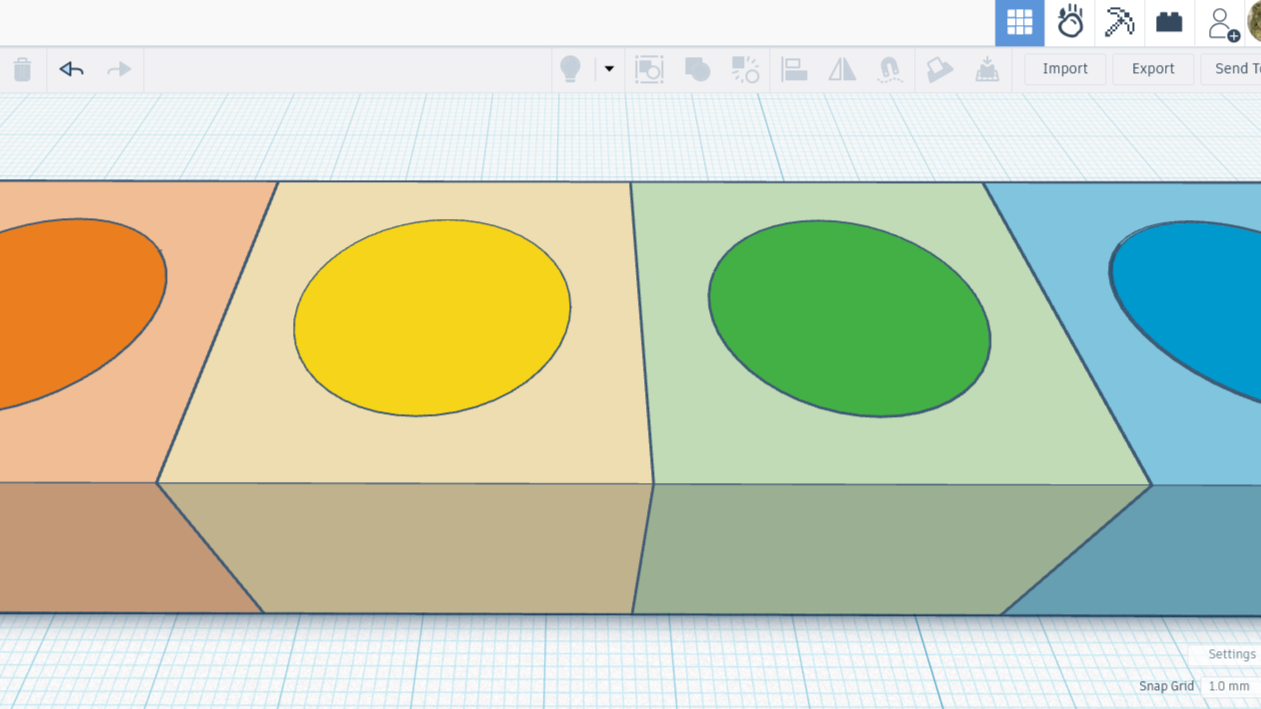
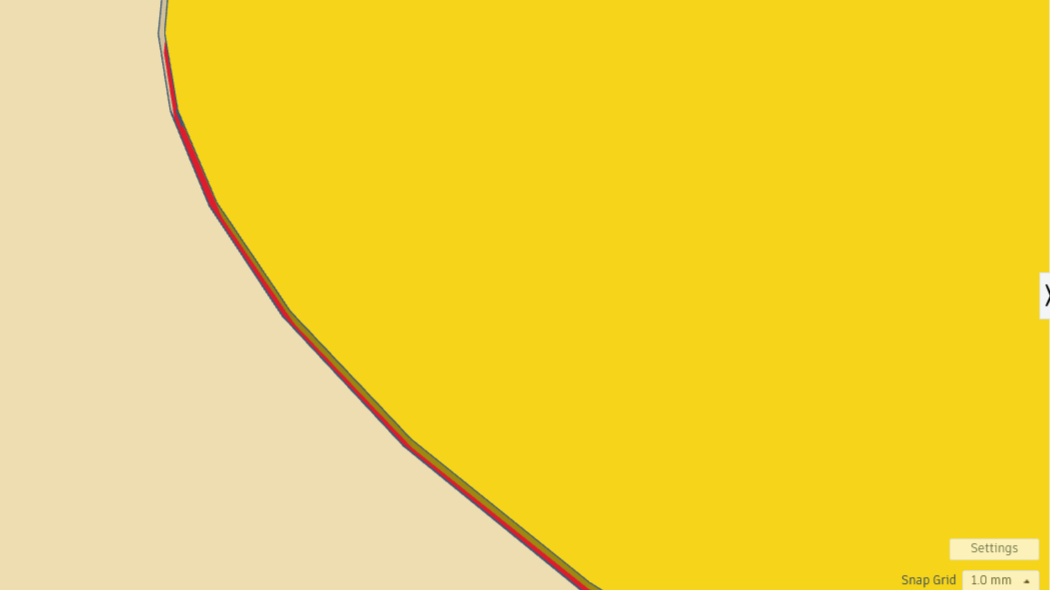
I found a nifty chart at a site called 3DChimera. It shows recommended tolerance gaps for various desired fits, including press, tight, normal, and loose. The site also explained why a 3D-printed hole is smaller than its dimensions: circles aren’t really round, they are made up of numerous sides. The picture on the page illustrates this point nicely. As for the various fits, I modeled some so you can see how they look!

Factors that Influence Tolerance
I found an excellent site with all manner of information about 3D printing tolerances. It had notes on various technologies used by that company, and included a spot on FDM (Fused Deposition Modeling), which is what this blog is about.
Xometry lists four factors that can influence tolerance in this type of printing. They are post-processing, especially in heavily supported areas, the width of the nozzle, shrinkage, and tolerance between printers. This list might look familiar; I referenced it in another post, when writing about how and why the same exact file might print differently.
That same source also lists material shrinkage, layer thickness, minimum feature size, and build size, as factors that can affect a print, then gives detailed explanations as to why those matter. The site also includes a tolerance chart similar to the one referenced above, but more general in that it applies to many types of 3D printing, with less regard to different levels of fit.
While the top portion of the source covers knowledge specific to the different types of 3D printing, the bottom portion talks about post-processing, as well as details the four main factors in 3D printing in general. I was a little surprised to learn that sanding, coating, and painting can change the clearance of an item.
My biggest take-aways are that I need to be mindful of my nozzle size and printer settings, and that there is shrinkage, which can vary by filament type.
Summary
Post-processing can change the tolerance of a part, using a different printer can make pieces too big or too small, switching colors can cause imprecision, and poor design can cause pieces to not fit together. Tolerance and clearance help to account for those, and are extremely important considerations when designing a model.
Some tolerance and gap-work can be done in CAD via design, either by changing or modifying the shape, or allowing for variance in other ways. These features can also be added by using the appropriate nozzle size or changing the layer thickness.
Bibliography
Hussein, Alexander
3D Printing Tolerances and Fits
3DChimera
14 January 2019
How to Design a Print with Perfect Tolerance EVERY Time
Slant3D
21 July 2025
Sevens, Ryan and Mroncz, Nikolaus
3D Printing Tolerances: What to Expect from each Process
Xometry
15 April 2025